
DORA PROJECT (2015-2016) was a cross-generational participatory art project that explored the contemporary relevance of history and the performative process of remembrance through the activating of archives and sites of memories. It was directed by artist Françoise Dupré in collaboration with Rebecca Snow, a visual and participatory artist. This website archives the project.
The project revisited World War Two history and early rocket engineering to create artworks that critically engaged with the politics of visualisation of memory as practice and addressed questions of ethics in art and science. The project was generated in response to the artists’ family histories. Françoise Dupré’s uncle, Robert Berthelot was a French Resistant political prisoner and survivor of Mittelbau-Dora Nazi concentration camp. Rebecca Snow’s great-grand-father, James Anderson, an industrial chemist, worked for the British Intelligence Objective Sub-Committee (BIOS), recovering German industrial evidences in 1945.
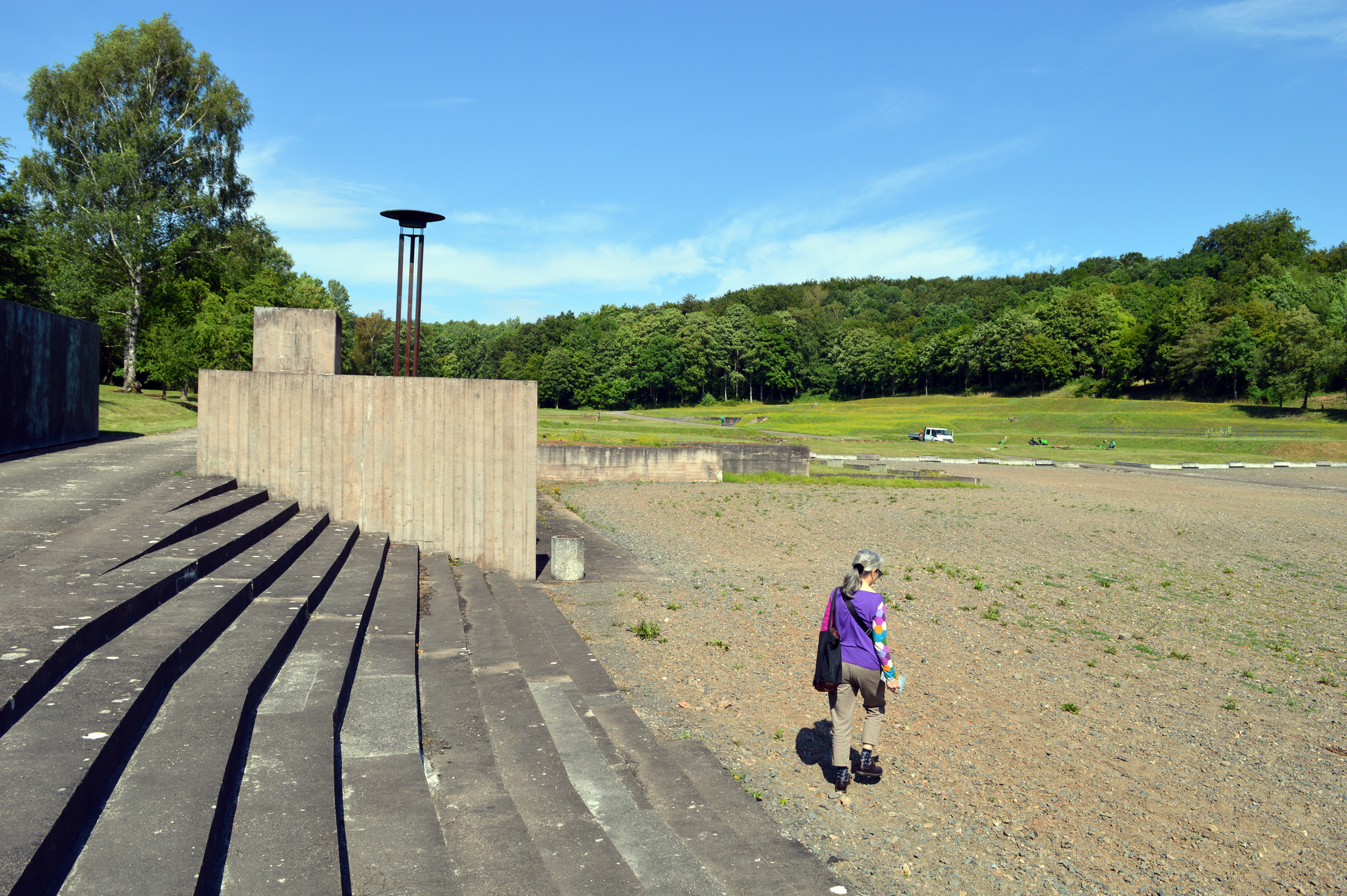
Mittelbau-Dora Concentration Camp Memorial, Germany.
Dora was the code name given to the Nazi Dora Concentration Camp located near the town of Nordhausen in Thuringia, Central Germany (1943-1945).
A site kept secret because of its armament company Mittelwerk, a vast underground factory that assembled V1 rockets (flying bombs) and V2 rockets (the first ballistic missiles).
It is estimated that more than 20,000 prisoners died between August 1943 and April 1945 in the camps of Mittelbau-Dora.
Re-connecting the history of space rockets to its Nazi origin The V2 – a Nazi weapon and space artefact – was the first guided ballistic missile. Its successors are space-launching rockets and intercontinental missiles with nuclear warheads. After WW2, V2 technology was used for the development of space and military American, European, Russian and British programmes. V2 Nazi chief rocket engineer and project leader Werner von Braun became NASA first director.
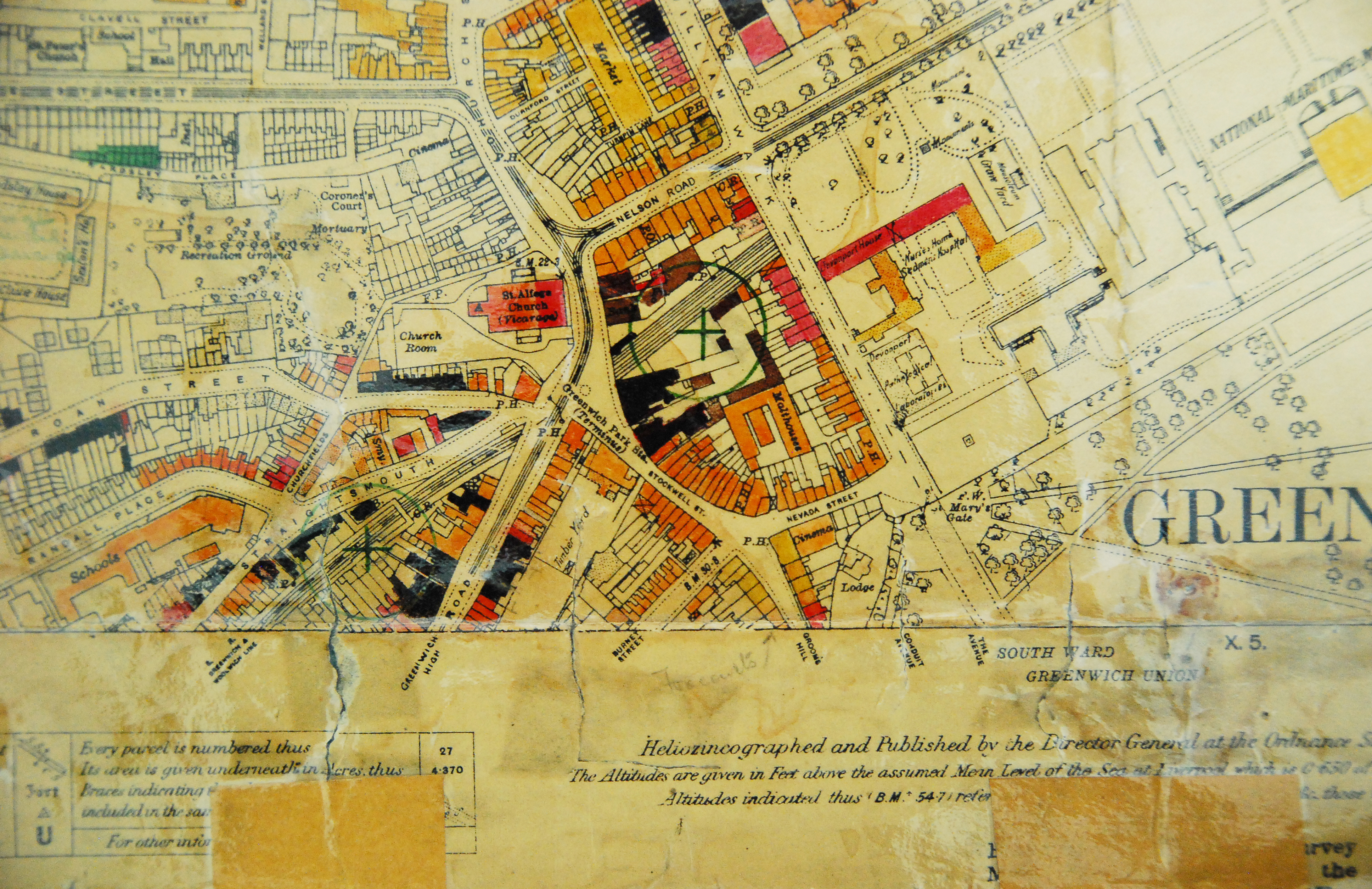
@ Greenwich Heritage Centre, photo: Ada Muntean.

London based, DORA PROJECT became also about the V2 attacks on the city.
Between September 1944 and March 1945, the attacks killed 2,500 Londoners. While many Londoners have heard about the V2, few know about its origin that contaminates and connect forever space conquest to the concentrationary universe.
On the 25 November 1944 at 12.26pm a V2 attack destroyed Woolworths and the Co-op, on New Cross Road, 168 people were killed and 123 injured.

DORA PROJECT was a twelve-month long cross-generational archiving and participatory project based in South East London concluding with an exhibition at Peckham Platform (April-May 2016). The exhibition included talks and participatory activities designed to engage audiences and local community groups. Research visits included Mittelbau-Dora Memorial in Germany and La Coupole, Centre d’Histoire et de Mémoire. Project’s activities included local participatory Commemorative Public Events near V2 London sites. This website provides full details of these activities.
The artists developed creative strategies for artworks that critically, ethically and affectively mourn victims of genocide and war, engaged with the politics of visual re-presentation of memory and the concentrationary universe and encouraged debates around the application of wartime science. This was achieved through a series of artworks and participatory projects.
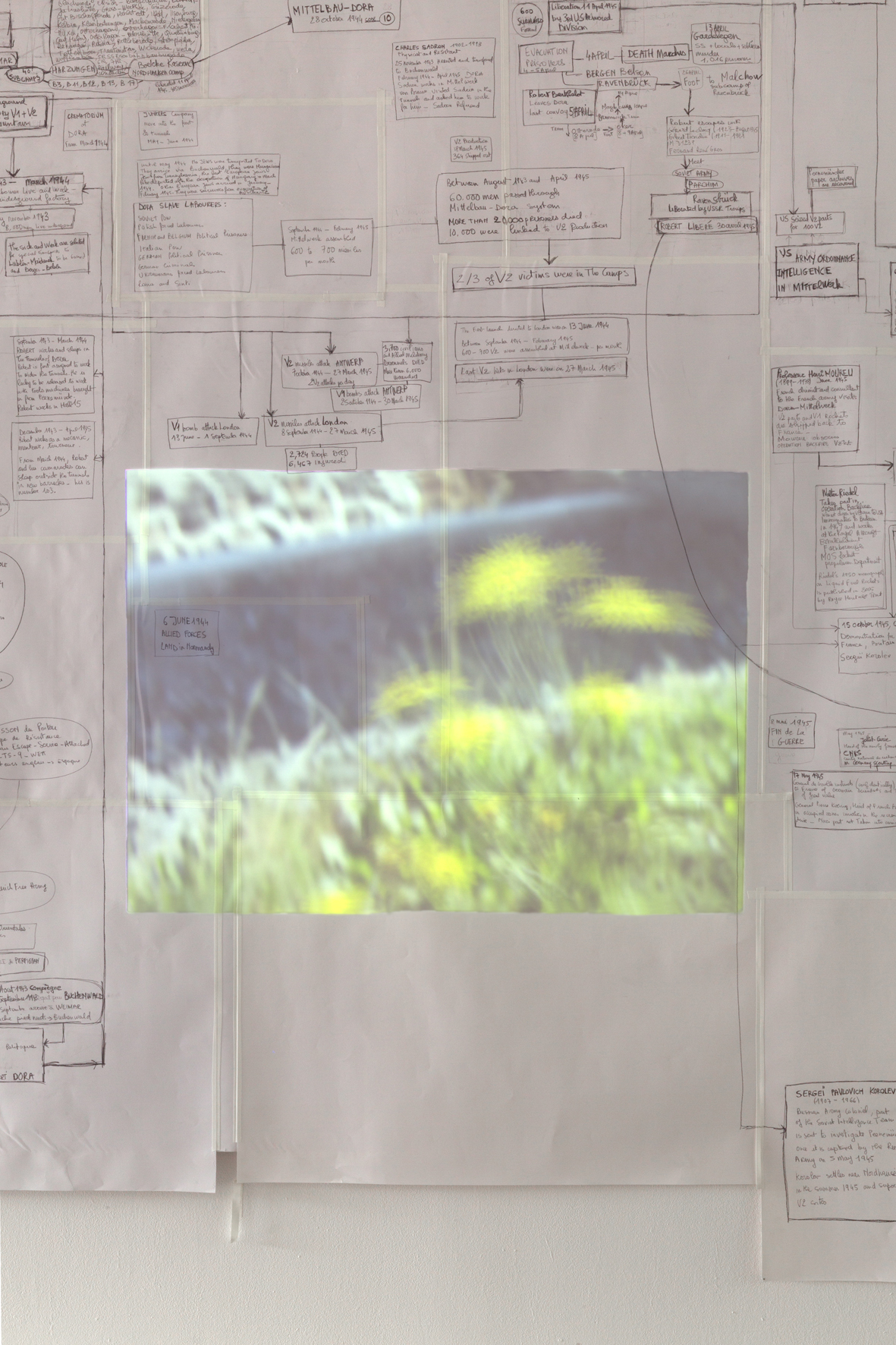
Their artworks Mapping by Dupré and Grey Area: a map sketched in film by Snow were shown in the DORA PROJECT Exhibition along side the film Field Report, a school project and the Postcard project.

© FXP Photography, London.

Rebecca Snow and student developing wall installation for Field Report a film project edited by Rebecca Snow, DORA PROJECT Exhibition, 2016.
© Françoise Dupré.
© FXP Photography, London.
DORA PROJECT addressed the ethics of science and technology for war and usage in its aftermath. The project invites us to question and care for our histories, cultures and ethics. It interrogates and contributes to the watchful necessity that is the retracing of our past, for fear of loss and a xenophobic re-writing of history. This is the legacy of the V2 victims.

DORA PROJECT was funded by Arts Council England and Birmingham City University, School of Art.
DORA PROJECT was supported by Fondation pour la Mémoire de la Déportation, (http://dora- ellrich.fr/) Commission Dora Ellrich, l’ Association Française Buchenwald Dora et Kommandos and La Coupole Centre d’Histoire et de Mémoire du Nord – Pas-de-Calais, France.
Partners: Goldsmiths, University of London, JFS, Peckham Platform
Consultants: Michael Neufeld, Curator of early rocketry, The Smithsonian National Air & Space Museum, Washington, USA. Laurent Thiery, historien, La Coupole, Centre d’Histoire et de Mémoire du Nord – Pas-de-Calais France. Gretchen Schafft, Public Anthropologist, Department of Anthropology, American University, Washington, USA.
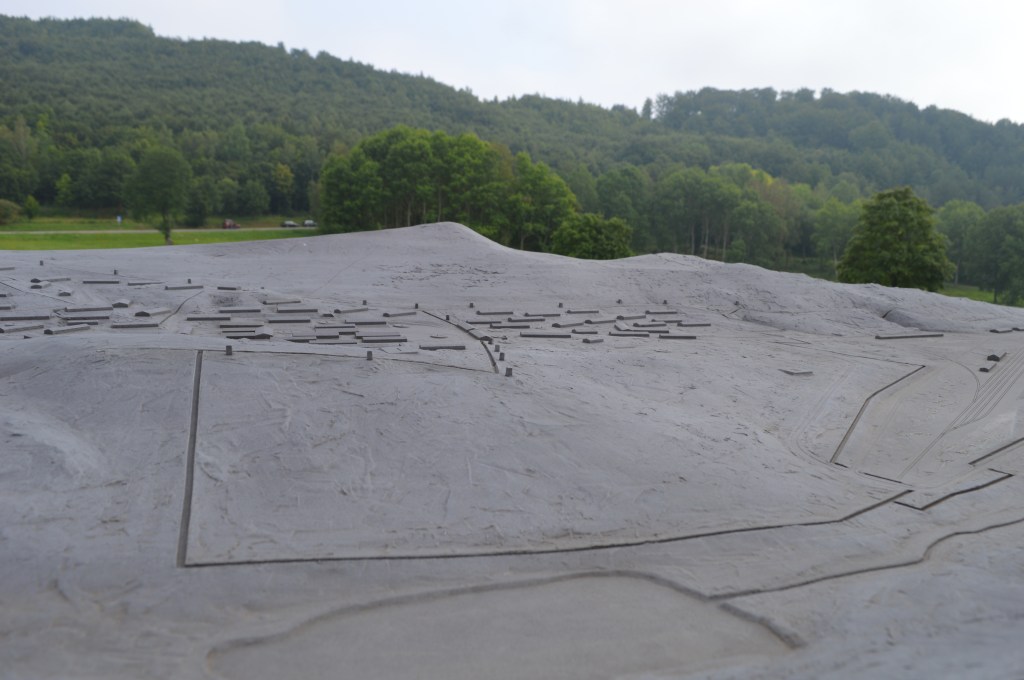
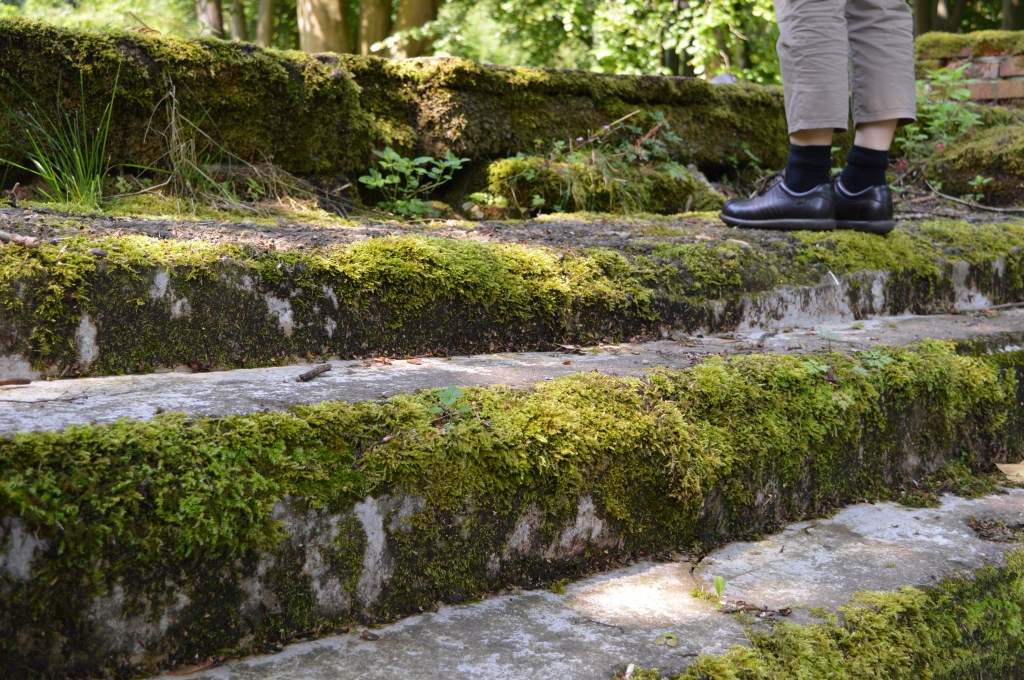
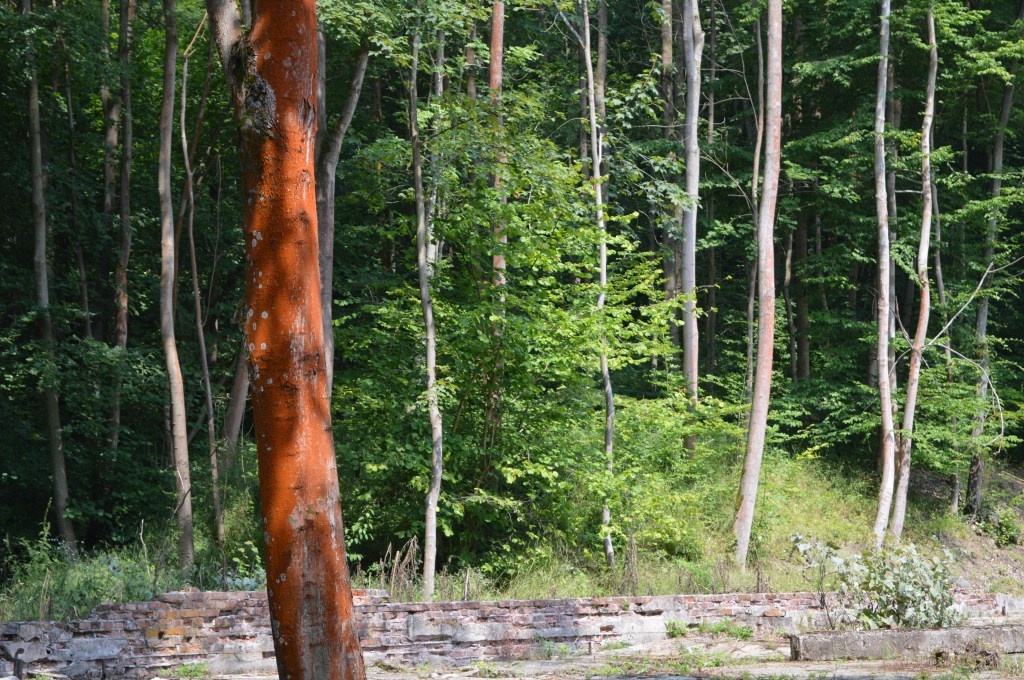
Artist research visit to Mittelbau-Dora Concentration Camp Memorial, July 2014. © Rebecca Snow.







 Dora Project